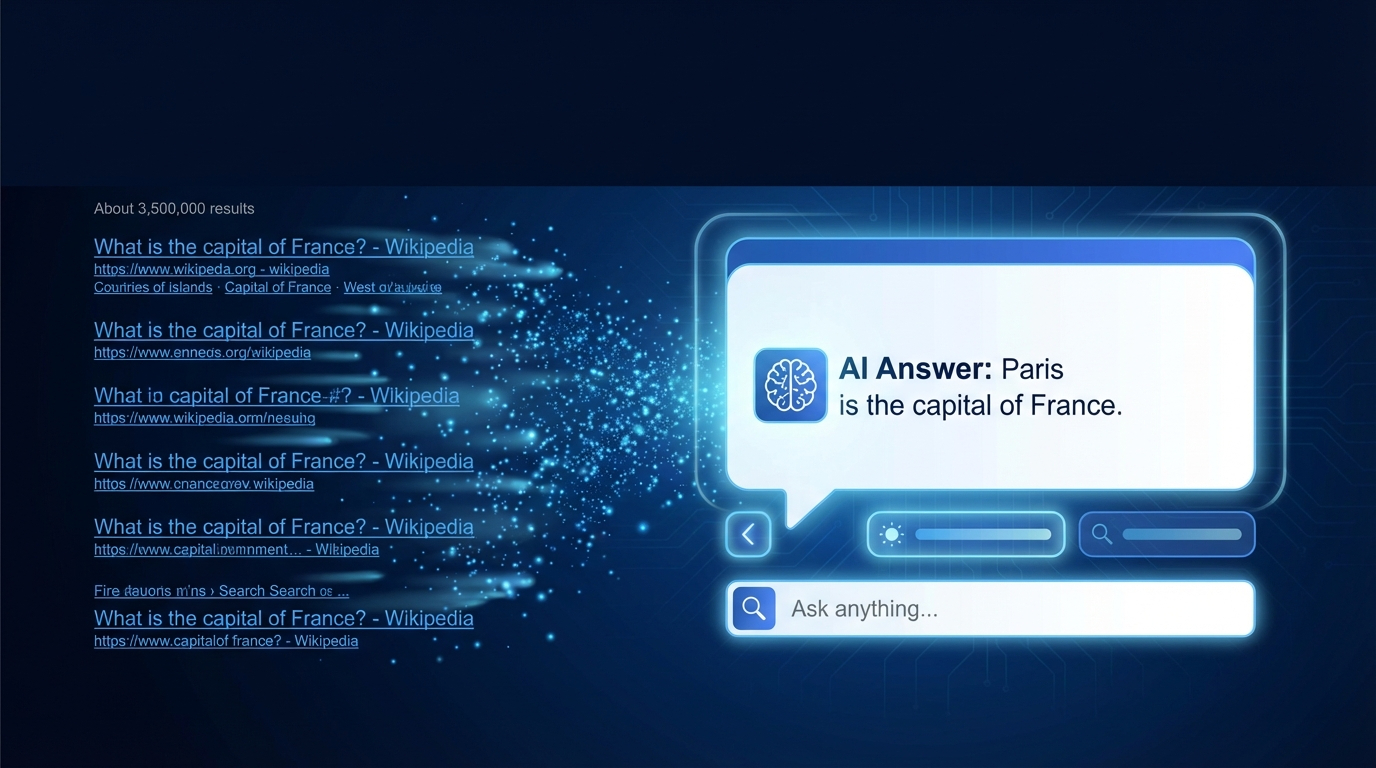
Do you remember the “good old days” of Google? You would type in a question, hit enter, and be greeted by a clean, simple list of ten blue links. You would scan the titles, maybe click the second or third one, and go on your merry way. It was a simpler time. It was a predictable time.
But let’s be honest, that time is dead.
If you have looked at a search result page (SERP) lately, you know exactly what I am talking about. The ten blue links are being pushed further and further down the page, buried under a mountain of ads, “People Also Ask” boxes, map packs, video carousels, and now, the biggest disruptor of them all: AI-generated overviews.
We are entering the era of the “Zero-Click” search. The user gets their answer without ever visiting your website. For a digital marketer or a business owner, that sounds terrifying, doesn’t it? But here is the twist: this isn’t the end of SEO. It is just the end of lazy SEO. As a digital strategist, I have watched this shift coming for years, and I am here to tell you that while the game has changed, the opportunity to win is actually bigger than ever, if you know how to play.
The Rise Of The Answer Engine
We need to stop thinking of Google as a search engine and start thinking of it as an “Answer Engine.” The goal of Google (and competitors like Bing with Copilot or Perplexity) is no longer just to direct traffic to your website. Their goal is to satisfy the user’s curiosity as quickly as possible, ideally right there on the search page.
Think about how you use the internet today. If you want to know “how to tie a tie,” do you want to read a 2,000-word blog post about the history of neckties? No. You want a 15-second video or a step-by-step diagram. Google knows this. That is why they are using AI to scrape the best content from the web, synthesize it, and serve it up on a silver platter. Contact Rohan for Services.
For businesses that relied on shallow, generic content to drive traffic, this is a disaster. But for those of us who prioritize depth and genuine expertise, this is a chance to cut through the noise.
Why Traffic Volume Is A Vanity Metric
In this new landscape, your total traffic might go down. I know, that hurts to hear. We are addicted to seeing those graphs go up and to the right. But let’s look closer.
If someone searches “what is the capital of France” and Google tells them “Paris,” they were never going to buy anything from you anyway. They were “tire kickers.” The traffic you lose in this new era is mostly low-value, informational traffic that rarely converts.
The traffic that does click through? That is high-intent traffic. These are the people who didn’t just want a quick answer; they wanted a deep dive. They wanted an expert opinion. They wanted you. So, while your total sessions might drop, your conversion rates could actually skyrocket, provided your website delivers the goods when they finally arrive.
Optimizing For The Machine And The Human
This brings us to the core of the new strategy: Answer Engine Optimization (AEO).
In the past, we stuffed keywords into meta tags and prayed. Today, we need to structure our content so that AI agents can easily understand and cite us. When ChatGPT or Gemini answers a user’s question, it has to get that information from somewhere. You want that “somewhere” to be your site.
How do you do that? By being direct. Don’t bury the lead. If your article is about “The Best CRM for Small Business,” don’t start with “What is a CRM?” start with “The best CRM for small business is X because of Y.” Use clear headings, bullet points, and schema markup (code that helps bots understand your content). You are essentially spoon-feeding the AI so that it, in turn, feeds your content to the user.

The Human Moat Experience Expertise Authoritativeness and Trustworthiness
You have probably heard of E-E-A-T (Experience, Expertise, Authoritativeness, and Trustworthiness). In a world flooded with AI-generated content, this is your lifeline.
AI can aggregate facts, but it cannot have experiences. It has never run a marketing campaign that failed. It has never had to fire a difficult client. It has never felt the rush of a successful product launch. You have.
Your content needs to lean heavily into your personal experience. Use “I” statements. Tell stories. Share specific data from your own case studies. When I write about SEO on Rohan Website, I don’t just quote Google’s guidelines; I tell you about the time I tanked a client’s ranking by accident and how I fixed it. That is the kind of “burstiness” and human messiness that AI cannot replicate and that readers crave.
Building A Brand That People Search For
Here is the ultimate cheat code for the post-ten-blue-links era: become the destination.
If people are searching for “best SEO consultant,” you are fighting a losing battle against the AI. But if they are searching for “Rohan Ahmad SEO,” you win every time.
Brand searches are immune to algorithm updates. When a user types your name, they are telling Google, “I don’t want an AI summary; I want this specific person.” This means your marketing strategy needs to move beyond just SEO. You need to be active on LinkedIn, building an email list, and creating video content. You need to build a reputation so strong that people bypass the search engine entirely and type your URL directly into the browser.
The Technical Foundation Still Matters
Just because we are focusing on high-level strategy doesn’t mean we can ignore the nuts and bolts. In fact, technical SEO is more important than ever.
If your site is slow, or if your mobile experience is clunky, the AI bots won’t bother crawling you. You need a solid foundation. This means clean code, fast loading times (Core Web Vitals), and a logical site structure. Think of your website like a library. If the books are thrown on the floor in a pile, the librarian (Google) can’t help anyone find them. If they are neatly organized on shelves with clear labels, the librarian can recommend them instantly.

Embracing The Long Tail And Nuance
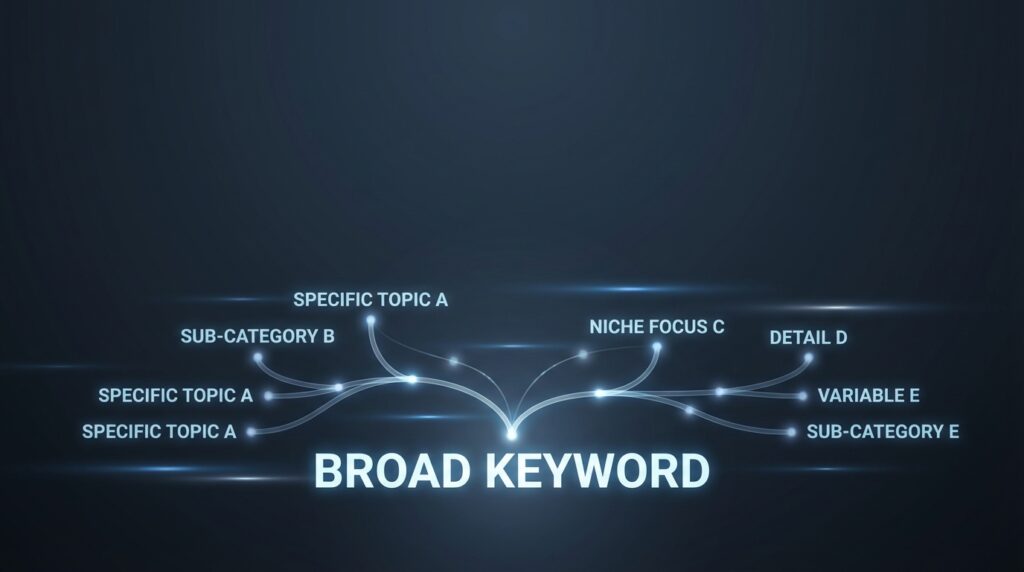
The “head terms”, short, popular keywords like “shoes” or “marketing”, are gone. They belong to the AI now. But the “long tail”, the specific, nuanced, complex queries, is wide open.
Instead of trying to rank for “SEO tips,” try ranking for “how to fix cannabilization issues on a Shopify site with 5000 products.” That is a query that requires nuance, context, and a human touch. It is a problem that an AI summary often gets wrong. By targeting these specific, high-value problems, you attract the kind of users who are actually looking for a solution, not just a factoid.
From Content Creator To Content Architect
We need to shift our mindset from “creating content” to “architecting information.”
It is no longer enough to just write a blog post. You need to build a content ecosystem. A video that explains the concept, a podcast that discusses the implications, a blog post that details the strategy, and a downloadable template that helps the user execute it.
This multi-format approach does two things. First, it caters to different learning styles. Second, it dominates the SERP. Even if your blue link gets pushed down, your YouTube video might show up in the video carousel, or your image might appear in the image pack. You are taking up more real estate on the screen, increasing the odds that the user clicks on something that belongs to you.
The Importance Of First Party Data
As search becomes more volatile, you cannot build your house on rented land. If your entire business depends on Google sending you traffic, you are one algorithm update away from bankruptcy.
You need to own your audience. Use your SEO traffic to feed an email list or a community. Once you have a user’s email address, you don’t need to worry about ten blue links or AI overviews. You have a direct line of communication. Use your website as a handshake, a way to introduce yourself, but try to move the conversation to a more stable channel as quickly as possible.
Final Words
The death of the ten blue links isn’t the apocalypse; it is a graduation. We are graduating from a web of clutter to a web of answers. For the spammers and the content farms, this is indeed the end. But for the experts, the strategists, and the true creators, the future is incredibly bright.
The goal of Rohan ahmad isn’t to trick a robot into ranking us #1. It is to provide so much value, insight, and human perspective that the robot has no choice but to recommend us. So, don’t mourn the blue links. Adapt, evolve, and start building a brand that no algorithm can replace. The search bar is changing, but the need for genuine connection remains exactly the same.