Do you remember what it was like to open your email inbox ten years ago? It was a wild west of generic newsletters, loud discount codes, and digital flyers screaming “Buy Now!” Brands would load up their entire subscriber list, craft one single message, and blast it out to everyone at the exact same time. It was the digital equivalent of throwing spaghetti at a wall and praying something would stick.
Well, let me tell you a secret: that spaghetti dried up a long time ago.
If you are running an online store in 2026, the inbox is the most competitive battlefield on the internet. Your customers are ruthless. They swipe left, hit delete, and click “unsubscribe” faster than you can blink. So, how do you break through the noise? You stop sending emails, and you start building relationships.
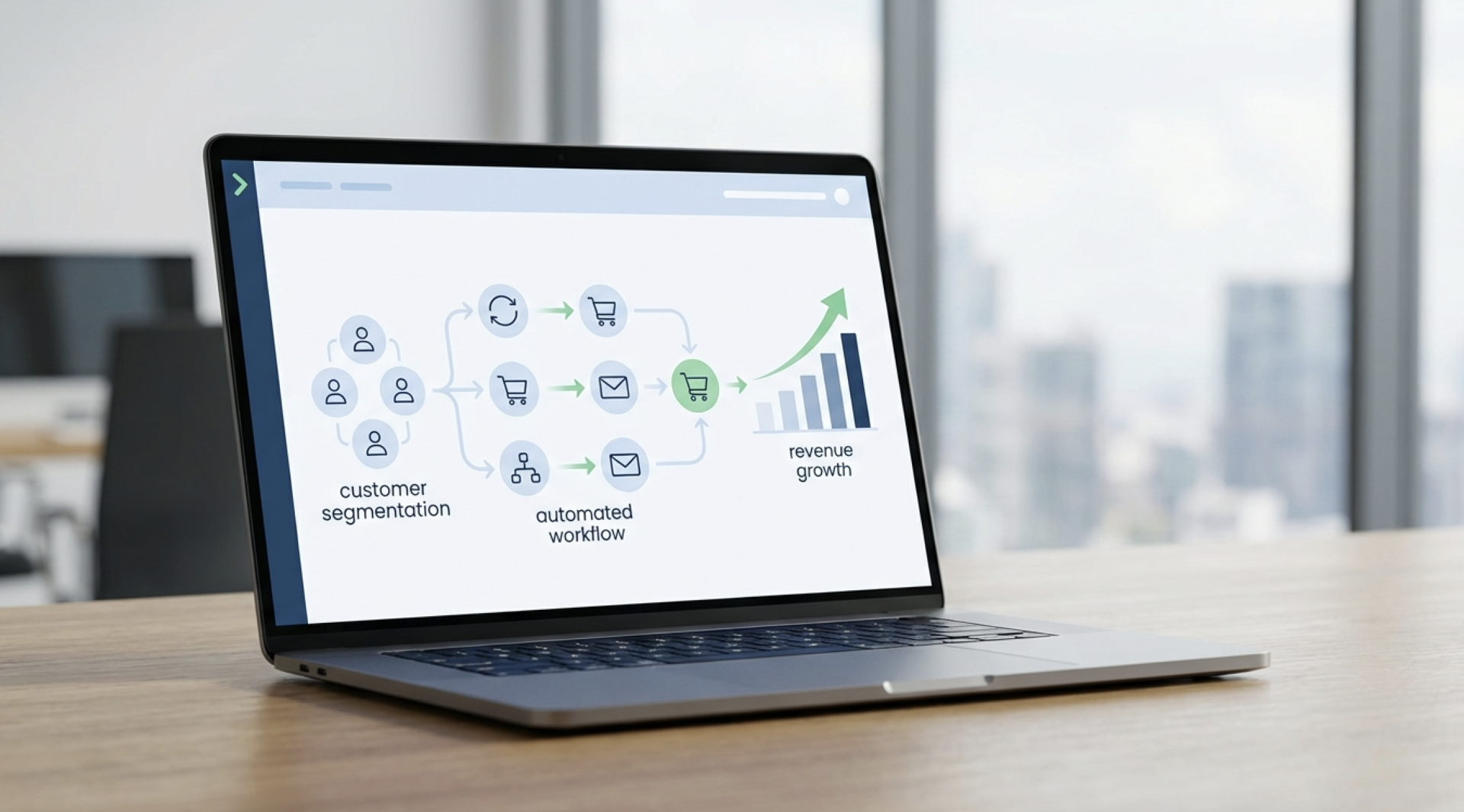
We are going to dive deep into how email marketing has evolved from a simple broadcast tool into a hyper-intelligent, revenue-generating machine. As a digital strategist, I spend a lot of time looking at what actually moves the needle for online brands, especially in fast-paced markets like UK drop shipping or custom Shopify builds. And the truth is, advanced email marketing automation for ecommerce is no longer a luxury. It is the engine that drives sustainable ecommerce revenue growth.
Let’s unpack exactly how this evolution happened, why your website’s basic needs are the foundation of this strategy, and how you can implement these modern flows today.
The Basic Needs of a Website Before You Send A Single Email
Before we can even talk about brilliant email automation, we have to talk about your digital storefront. You can have the most sophisticated email marketing automation in the world, but if your website is fundamentally broken, you are pouring water into a leaky bucket.
Think about it. Where do your email subscribers come from? Your website.
To capture a high-quality email lead, your website must fulfill a few non-negotiable basic needs. First, it needs lightning-fast speed. If your Shopify store takes five seconds to load on a mobile device, the user will bounce before your beautiful opt-in pop-up even has a chance to trigger. Core Web Vitals are not just for SEO; they are for user retention.
Second, your site needs a crystal-clear value proposition. When a visitor lands on your homepage, they need to know exactly what you sell and why they should care within three seconds.
Finally, you need strategic data capture mechanisms. The days of a boring “Subscribe to our Newsletter” box in the footer are over. Nobody wants another newsletter. They want value. You need a compelling lead magnet, maybe a 15% discount, a free styling guide, or entry into a VIP giveaway. Your website’s basic job is to build trust instantly so the user feels comfortable handing over their most precious digital asset: their email address.
The Death of Batch and Blast And The Rise of Intent
Let’s travel back to the evolution of the send button. The old model was simple but flawed: create a campaign, select all contacts, and hit send.
The problem? You were sending the same winter coat promotion to a customer in freezing London and a customer in sunny California. You were offering a “10% off your first order” discount to a loyal customer who had already bought from you five times. It was insulting to the consumer and damaging to your brand.
Today, advanced email marketing automation for ecommerce is entirely driven by user intent and behavior.
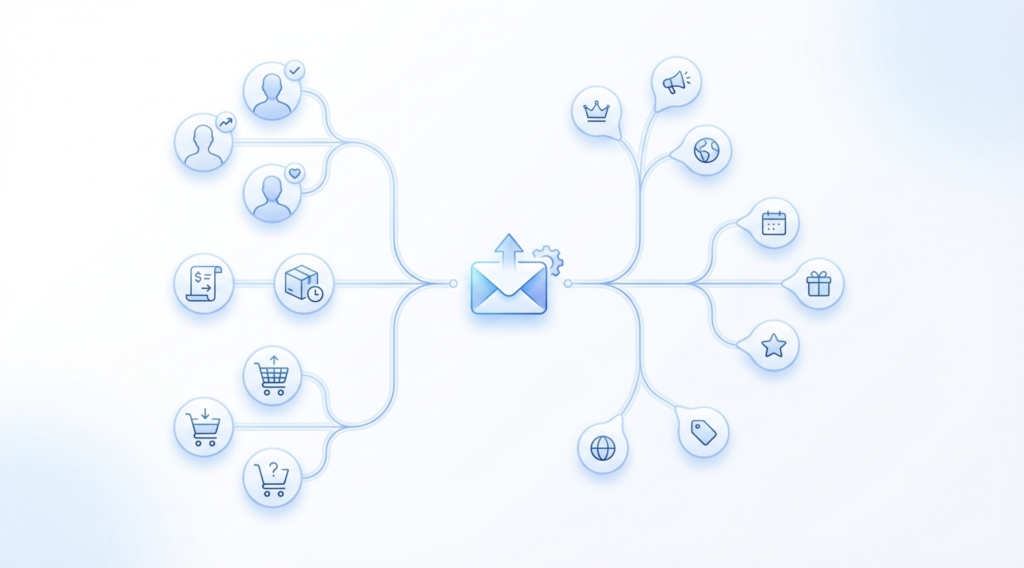
Instead of broadcasting one message to ten thousand people, you are setting up systems that send ten thousand unique messages to ten thousand individuals, exactly when they need to hear from you. This is achieved through triggers. A trigger is an action the user takes, or doesn’t take, on your website. Did they view a product? Trigger an email. Did they add to cart but close the window? Trigger an email. Has it been 60 days since their last purchase? Trigger an email.
This shift from manual campaigns to automated flows is how you decouple your time from your revenue. You build the machine once, and it prints money while you sleep.
Zero Party Data The New Gold Rush For Personalization
How do you know what your customer actually wants? You ask them.
With privacy laws tightening and third-party cookies crumbling, smart brands are shifting their focus to zero-party data. This is information that a customer intentionally and proactively shares with you.
Imagine you run an online cosmetics store. Instead of a generic pop-up, you use a “Find Your Perfect Skincare Routine” quiz. To get the results, the user enters their email. But look at what else you just captured: you now know their skin type, their age range, their biggest skincare concern, and their budget.
This data flows directly into your email marketing platform. Now, your automation can segment these users. The teenager with acne gets a completely different welcome email and product recommendation than the woman in her fifties looking for anti-aging serums. This level of hyper-personalization creates a massive spike in conversion rates because the customer feels deeply understood.
Mastering The Welcome Series Flow
The welcome series is the digital red carpet for your brand. When someone hands over their email address, they are at the highest level of engagement they will likely ever be. Their intent is peaking. If you just send them a single email with a discount code and then ignore them for a month, you are leaving thousands of dollars on the table.
A modern welcome series is usually a sequence of three to five emails spaced out over a week.
Email one delivers the promised incentive (the discount or guide) immediately. It should be short, punchy, and highly clickable. Email two, sent a day later, introduces the brand story. Who are the founders? Why does this brand exist? People buy from people, not faceless corporations. Email three showcases your best-selling products through user-generated content and social proof. Show real people using and loving your stuff. Email four can introduce your social media channels or a community aspect.
By the end of this flow, the subscriber hasn’t just received a coupon; they have been indoctrinated into your brand’s universe.
Reinventing The Abandoned Cart Email Templates
We all know the sting of an abandoned cart. The customer did the hard work. They browsed, they selected a size, they clicked “Add to Cart,” and they even started the checkout process. And then… a ghost town. They got distracted by a text message, or their dog barked, or they thought shipping was too high.
Cart abandonment is the single biggest leak in any ecommerce funnel. But the way we recover these carts has evolved dramatically.
The old abandoned cart email templates were robotic: “You left something behind. Click here to buy.”
In 2026, the best Shopify conversion rate optimization strategies use a multi-step, dynamic approach. The first email goes out within an hour. It assumes a technical glitch or a simple distraction. “Did your Wi-Fi drop? We saved your cart for you.” It features a dynamic image of the exact product they left behind.
If they don’t bite, email two hits 24 hours later. This is where you introduce urgency or social proof. Show them five-star reviews of the specific item in their cart. Let them know inventory is running low.
Email three, sent 48 hours later, is where you drop the hammer. This is the time for a dynamic, time-sensitive discount code. “Take 10% off to complete your order, but this code expires in 4 hours.” You are turning a lost sale into a psychological event.
Browse Abandonment When They Look But Dont Touch
What about the people who don’t even make it to the cart? Browse abandonment is the sneaky little sibling of cart abandonment.
A user clicks on a specific product page, scrolls through the images, reads the description, and then leaves. Advanced ecommerce email flows track this behavior. Because they didn’t add the item to their cart, you shouldn’t be aggressive. Instead, a browse abandonment email is soft and helpful.
“Did you see something you liked? Here is a closer look at the [Product Name].” You can also include related items. “If you liked that jacket, you might also love these boots.” It is a gentle nudge that feels like a helpful retail assistant rather than a pushy salesperson.
Post Purchase Flows Turning One Time Buyers Into Fanatics
Most brands spend 90% of their energy trying to acquire a new customer and 10% trying to keep them. This is financially disastrous. It costs significantly more to acquire a new customer than it does to retain an existing one.
The post-purchase flow is where ordinary brands become legendary.
Immediately after a purchase, the customer should receive a beautifully branded order confirmation. But the magic happens while they are waiting for the product to arrive. Send them an email explaining how to use the product, how to care for it, or an unboxing video. Keep their excitement high so buyer’s remorse doesn’t set in.
Once the product arrives, trigger a review request email. But don’t stop there. If they leave a 5-star review, automate an email that invites them to your VIP referral program. If they leave a 1-star review, trigger an internal ticket to your customer service team via a tool like n8n automation so a real human can intervene immediately. This is how you protect your brand reputation on autopilot.
The Replenishment And Winback Strategies
If you sell a consumable product, like coffee, supplements, or skincare, replenishment flows are your best friend.
If you know your bag of coffee typically lasts 30 days, set an automation to trigger on day 25. “Running low? Reorder now with one click.” It is the ultimate convenience for the customer and guaranteed recurring revenue for you.
For non-consumable products, you need a Winback flow. If a customer hasn’t purchased from you in 120 days, they are slipping away. Send them a highly personalized “We miss you” campaign. Show them what is new since their last visit. Offer them a massive, one-time discount to reactivate them. If they still don’t engage, it might be time to scrub them from your list.
List Cleaning And The Best Time To Send Emails 2026
Let’s talk about list hygiene. Having an email list of 100,000 subscribers sounds impressive, but if 60,000 of them haven’t opened an email in two years, they are actively hurting your business.
Internet Service Providers (ISPs) like Gmail and Yahoo are ruthless in 2026. If they see that you are constantly sending emails to people who ignore them, they will assume you are sending spam. Eventually, your emails will go straight to the junk folder, even for the people who actually want to read them.
You must automate list cleaning. Create a “Sunset Flow” for unengaged subscribers. Send them one final email: “Do you still want to hear from us? Click yes, or we will unsubscribe you.” If they ignore it, cut them loose. A smaller, highly engaged list will always generate more ecommerce revenue growth than a massive, dead list.
And what about the age-old question: what is the best time to send emails 2026?
The answer is: there is no universal best time. Tuesday at 10 AM is a myth. The best time to send an email is exactly when your specific customer is most likely to open it. Modern AI-driven email platforms analyze the historical behavior of every single user. The software knows that John opens his emails during his morning commute at 7:30 AM, while Sarah checks hers before bed at 10:30 PM. The system automatically holds the email and delivers it to their inbox at their specific optimal time. This is the power of machine learning working for your bottom line.
AI In Email Marketing From Subject Lines To Dynamic Content
Artificial Intelligence isn’t just optimizing send times; it is fundamentally changing how we write and design emails.
We used to A/B test two subject lines and guess which one would win. Now, AI tools can generate dozens of high-converting subject lines based on your brand voice and historical open rates.
Furthermore, dynamic content blocks allow you to change the actual contents of the email based on the recipient’s profile. If you have a clothing store, the email campaign can automatically show men’s clothing to your male subscribers and women’s clothing to your female subscribers, all from a single campaign build. You are delivering a highly bespoke experience without doing the manual labor of building ten different emails.
How To Audit Your Current Email Marketing Strategy
If you are reading this and realizing your current setup is just a basic newsletter and a generic abandoned cart email, don’t panic. You can fix this. Here is how you run a quick audit on your own system:
- Check Your Sign-Up Forms: Are they visible? Is the offer compelling? Are you capturing zero-party data (like a birthday or preference) right away?
- Review Your Welcome Series: Are you actually introducing your brand, or are you just yelling at them to buy? Does the flow last at least three emails?
- Test Your Abandoned Cart: Go to your own website, add an item to the cart, enter your email, and leave. See what happens. Is the email plain? Is the link broken? Does it create urgency?
- Look At Your Deliverability: Go into your analytics. If your open rates have suddenly plummeted across the board, you might have a deliverability issue. It is time to clean that list.
- Calculate Your Email Revenue Percentage: In a healthy ecommerce business, advanced email marketing automation should account for 20% to 30% of your total store revenue. If you are sitting at 5%, you have a massive opportunity for immediate growth.

The Synergy Between SEO Web Design And Email
Email marketing does not exist in a vacuum. It is part of a holistic digital ecosystem.
All the hard work you do in SEO to rank your site, all the money you spend on Google Ads to drive traffic, and all the effort you put into Elementor or Shopify design to create a beautiful user experience, it all culminates in capturing the lead.
Email marketing is the safety net. It catches the 97% of people who visit your website and don’t buy on the first day. It nurtures them, educates them, and gently guides them back to the checkout page when they are ready. When your website, your search strategy, and your email automation are all talking to each other, you create an unstoppable flywheel of growth.
Final Words
The days of batch-and-blast emails are buried in the digital graveyard. In 2026, the brands that win are the ones that treat their email subscribers like human beings, not data points.
By implementing advanced email marketing automation for ecommerce, you are building a system that anticipates needs, solves problems, and delivers massive value on autopilot. It starts with ensuring the basic needs of a website are met to capture the right audience. From there, it is about leveraging Klaviyo flows for Shopify, mastering those abandoned cart email templates, and using zero-party data to personalize every single touchpoint.
Stop viewing email as a digital megaphone, and start viewing it as a personalized concierge service for your best customers. Take a look under the hood of your email platform today. Build the flows, test the triggers, and watch how quickly your ecommerce revenue growth transforms. Your customers are waiting in their inbox, what are you going to say to them?