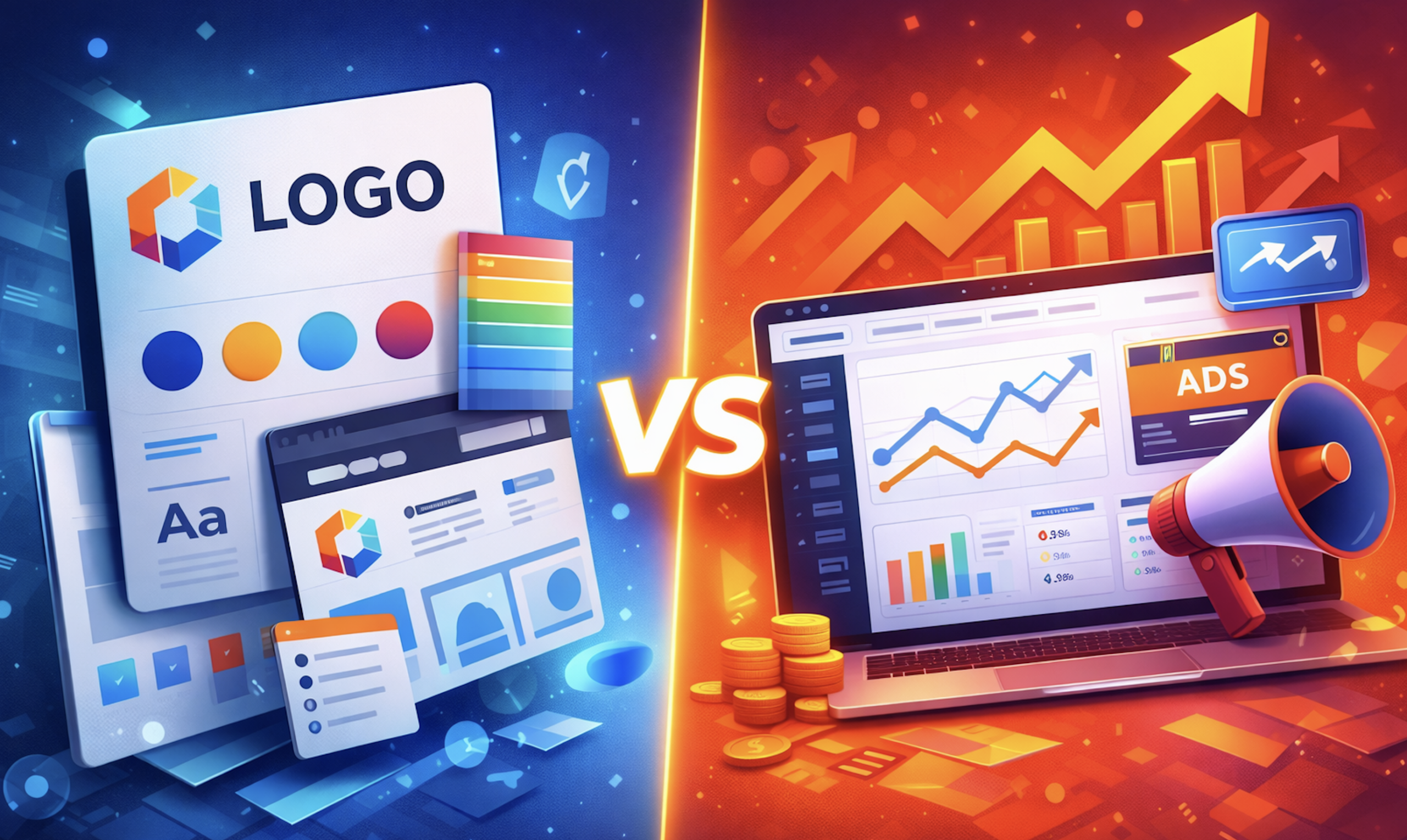
The tension is real. If you focus solely on branding, you might have the most beautiful business that nobody has ever heard of. If you focus only on marketing, you might get people to click, but they’ll leave the second they realize your brand has the personality of a damp sponge. So, which one deserves your attention first? Let’s peel back the layers and settle this once and for all.
Understanding the Soul of Branding
Think of branding as the soul of your business. It’s not just a logo or a specific shade of “millennial pink.” Branding is the gut feeling someone has when they hear your name. It’s the “why” behind what you do. If your business were a person, branding would be their personality, their values, and how they make people feel after a conversation.
Branding is about the long game. It’s the foundation you build so that when people are ready to buy, they don’t even look at your competitors. Why do people wait in line for hours for a new iPhone when there are perfectly good phones at half the price? That’s not marketing; that’s branding. It’s an emotional connection that transcends a transaction.
The Engine of Marketing
If branding is the soul, marketing is the engine. It’s the megaphone you use to tell the world you exist. Marketing is tactical, measurable, and often short-term. It’s the Facebook ad, the SEO-optimized blog post, the email newsletter, and the “Buy One Get One Free” sale.
Marketing is how you get people into your “store,” whether that’s a physical location or a digital landing page. Its primary job is to drive action. It’s about finding where your audience hangs out and waving a giant flag that says, “Hey! I have exactly what you need right now.” Without marketing, your brand is just a secret. And in business, secrets don’t pay the bills.
The Identity Crisis Why Branding Sets the Stage
Imagine trying to introduce yourself at a party when you don’t even know your own name or what you do for a living. You’d be awkward, confusing, and likely ignored. That’s what marketing feels like without a brand.
Branding defines your “who” and “why.” Before you spend a single dollar on an ad, you need to know who you are talking to. Are you the luxury choice for high-end executives, or the scrappy, affordable alternative for students? If you try to market to everyone without a clear brand identity, you end up appealing to no one. Branding gives your marketing a target to aim for.
The Reality Check Why Marketing Funds the Dream
Now, let’s get a little cynical for a second. You can have the most profound, soul-stirring brand identity in human history, but if you don’t make a sale, you don’t have a business you have a hobby.
Marketing is what provides the oxygen (cash flow) that keeps the brand alive. For many startups, focusing 100% on branding for six months is a luxury they simply can’t afford. You need data. You need to know if people actually want what you’re selling. Marketing provides that feedback loop. It’s the “test-and-learn” phase that helps you refine your brand based on real human behavior, not just what you think looks cool on a mood board.
Branding Is the Promise Marketing Is the Delivery
Here’s a metaphor for you: Branding is the invitation to a wedding, and marketing is the GPS directions to get there. The invitation sets the tone it tells you if it’s a black-tie affair or a beach party. It builds anticipation. But without the GPS, you’re just driving around in circles in a tuxedo.
Marketing brings people to the door, but branding is what makes them stay for the cake. If your marketing promises a high-end, seamless experience, but your brand (the actual interaction) feels cheap and disorganized, you’ve broken a promise. That’s how you get one-star reviews. Consistency between the two is where the magic happens.
What Happens When You Ignore Branding
We’ve all seen businesses that are “all marketing, no brand.” They are the ones with the aggressive “ACT NOW” pop-ups and the generic stock photos. They might make a quick buck, but they are constantly on a treadmill.
Because they haven’t built a brand, they have no loyalty. As soon as a competitor offers the same product for $2 cheaper, their customers vanish. They have to keep spending more and more on ads just to stay relevant because they haven’t built any “brand equity.” They are essentially renting their customers rather than owning the relationship.
What Happens When You Ignore Marketing
On the flip side, we’ve seen the “all brand, no marketing” trap. This is the boutique coffee shop with the perfect interior design and the hand-stamped napkins that closes down after three months because nobody knew it was there.
Being “too cool” for marketing is a death sentence. You might feel like your work should “speak for itself,” but in 2026, the digital noise is deafening. Even the best brands need a strategy to break through the static. If you aren’t actively telling your story, you’re letting the market tell it for you—or worse, ignore you entirely.
The Hybrid Approach The First 90 Days
So, back to the big question: What comes first? The answer is a bit of a cheat it’s Branding-Lite followed by Aggressive Marketing.
You don’t need a $10,000 brand strategy on day one. But you do need a name, a clear value proposition, and a consistent “voice.” Once you have the skeleton of a brand, you pivot to marketing to see if that skeleton can actually walk. Use your marketing to test your brand. If your ads for “Eco-Friendly Cleaning” get zero clicks, but your ads for “Fastest Cleaning Service” blow up, your market is telling you what your brand should actually be.
Building Trust in an Automated World
In the age of AI, marketing has become incredibly easy to automate. Anyone can generate 500 social media posts in ten minutes. But you know what can’t be automated? Trust.
This is where branding wins. As the internet becomes flooded with generic, AI-generated marketing noise, people will crave human connection more than ever. A strong brand feels human. It has flaws, it has opinions, and it has a “vibe” that a machine can’t perfectly replicate. In 2026, your brand is your shield against being replaced by a cheaper, automated alternative.
The Role of SEO and AEO in the Debate
Let’s talk about search. Marketing is the SEO (Search Engine Optimization) work you do to rank for keywords like “best plumber in Nashville.” But branding is why someone clicks on your link instead of the three above you.
With the rise of Answer Engine Optimization (AEO), where AI just gives the user a direct answer, your brand becomes even more critical. If an AI says, “There are three top-rated architects in your area,” the user is going to look for the brand they recognize or the one that feels most aligned with their style. Marketing gets you on the list; branding gets you the call.
Is Branding an Expense or an Investment
Many business owners view branding as an expense like buying a fancy office chair. But it’s actually an investment that appreciates over time. Marketing is often an expense you pay for the ad, the ad runs, the money is gone.
However, every dollar you spend on marketing should also be reinforcing your brand. If your ads are consistent in tone and visual style, you’re “double-dipping.” You’re getting the immediate click (marketing) while also planting a seed in the user’s mind (branding). If you change your logo and “voice” every three weeks, you’re throwing that investment away.
How to Scale Both Simultaneously
As you grow, the relationship shifts. In the beginning, you might be 20% brand and 80% marketing because you need to survive. As you mature, that should move toward 50/50.
A mature business uses branding to lower their marketing costs. When people start searching for your brand name specifically rather than a generic product category, your “cost per acquisition” drops significantly. You’re no longer bidding against the whole world for the word “shoes”; you’re just waiting for people to type in “YourBrandName shoes.” That’s the ultimate goal.
The Feedback Loop Listening to Your Audience

The best brands aren’t created in a vacuum by a “creative genius.” They are co-created with the audience. Your marketing is your primary research tool for this.
Look at your comments. Look at the questions people ask in your DMs. If people keep complimenting your “fast shipping” even though you thought your “low prices” were your main brand feature, guess what? Your brand is now “The Fast Shipping Guys.” Marketing gives you the data, and branding is how you package that data into a lasting identity.
Final Words
So, Branding vs Marketing: who wins? The truth is, they are two sides of the same coin. Branding is the strategy, and marketing is the execution. If you focus on marketing first without any brand foundation, you’re just a loud voice with nothing to say. If you focus on branding without any marketing, you’re a genius whispering in a soundproof room.
Start with a “Minimum Viable Brand” know who you are and who you serve. Then, hit the gas with marketing. Let the world tell you if your brand is actually working. Refine, repeat, and remember: marketing makes the sale, but branding makes the customer.